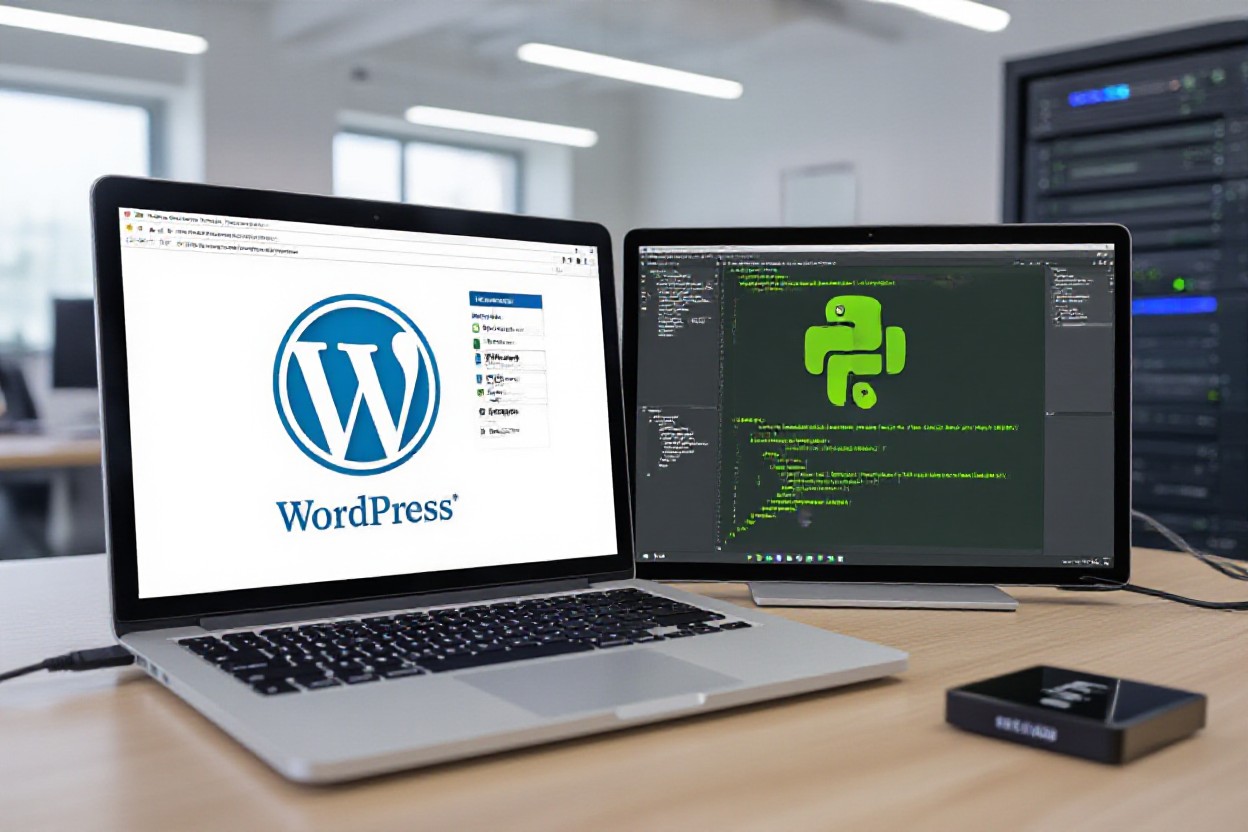
Migrating our Artistic Controls Light and Sound website from WordPress to Django was not an easy decision. We need to juggle between the learning of new Python coding compare to with already running WordPress site. We started using WordPress since 2013 to run our company website and upgraded to using a professional theme in 2019. WordPress had served us well for many years as a fast and accessible content management system that allowed our marketing and operations teams to publish content with ease.
However, as our business grew and our digital requirements became more complex, we started to feel the limitations of a plugin-driven platform. Performance tuning, custom workflows, system integrations, and long-term scalability were becoming increasingly difficult to manage within the WordPress ecosystem. This led us to seriously evaluate a full migration to a custom web framework like Django CMS, Django Framework and Wagtail CMS. After extensive research, Django Framework became our platform of choice.
Why Do We Moved From WordPress To Django
WordPress was easy to setup and with few plugin and proper theme the website can be live fast. WordPress offers a user-friendly interface, extensive plugin and many theme to choose, making it ideal for quickly launching our company website. It is the most popular choice of website with over 40% of all website globally uses WordPress.
But when our requirements start to include custom workflows, complex data models, unique user experiences, or integration with AI Model, WordPress need lots of patchwork of plugins and custom code that can be difficult to maintain. And we need to update the plugin regularly since this is easily targeted by hacker. Update the plugin sometime break our website.
There is lot of spam. And we hated it. The performance of the website is getting slow to load. We have tried Caching, CDN, plugin, premium hosting but it is still the same. The plugin is expensive for some and the cost add up a lot. To add membership will cost money. Custom development of the WordPress theme is also messy and difficult to do.
We are spending more time fixing the WordPress then actually improve the platform.
Django For Growing Company Website
We choose Django as backend and HTML, CSS Bootstrap framework and JavaScript as our frontend. One of the primary reasons we chose Django over WordPress was the level of control it offers at both the application and data layers. Django allows us to design the system architecture exactly around our business logic. We are no longer constrained by rigid post types or third-party plugin behavior. With Django, every feature is purpose-built, we can integrate agent AI in the future and how content is stored and rendered to how users interact with the system. This flexibility has enabled us to build a website that behaves what we wanted for lighting and sound company rather than a generic content site.
Another major advantage of Django is performance and scalability. WordPress websites often rely heavily on plugins, which can introduce unnecessary overhead, security risks, and maintenance complexity. Django and their plugin is an open source and free to use. We don't have to pay yearly or monthly fee like the WordPress plugin. This bring better user experience because of faster loading times and lower cost and flexibility.
Django follows a clean Model-View-Template architecture and this structure allows us to optimize queries, cache intelligently, and scale horizontally as traffic grows. For a company website that integrates content, automation, and backend workflows, Django provides a far more sustainable foundation.
Security was also a key factor in our decision. While WordPress can be secured, it remains one of the most targeted platforms on the internet due to its widespread usage and plugin vulnerabilities. Django is designed with security in mind and includes built-in protections against common threats such as SQL injection, cross-site scripting, and cross-site request forgery. By reducing reliance on third-party plugins and maintaining full control over the codebase, we significantly lowered our attack surface and improved overall system reliability.
Migrating our WordPress database to Django
That said, migrating from WordPress database to Django is not an easy task, and it is important to be honest about the challenges involved. Since database schema of the WordPress website is difference from the Django website and we added lots of other data schema to the content. We try to migrate all the data from WordPress to Django by export the page details in the XML file from the WordPress. After exporting the data XML file we wrote script (actually we download from GitHub) that read from the XML file and populate the current Django database. It does not work well for us.
Finally we chose the hardest way that is to manually copy the content from old website to new website. That is the most boring part but it work.
Challenges Face
One of the challenges face is learning Django requires strong programming knowledge and disciplined development practices. Our internal team needed to polish their Python skills and invest time in learning Django’s framework concepts, including models, views, templates, middleware, and deployment workflows.
This learning curve was one of the most significant considerations in our migration journey.
To ensure the project moved forward efficiently and followed best practices, we ask help from the experienced technical friend to support the process. These specialists helped us design the system architecture, implement clean and maintainable code, and establish development standards. Their expertise was particularly valuable during data migration, where we had to carefully transfer content, media files, and SEO-related metadata from WordPress into Django without breaking URLs or losing search engine rankings. This phase required careful planning, testing, and validation to avoid disruptions to our online presence. The media files is running on AWS S3 bucket folder.
Another key consideration during the migration was content management usability. While Django is a developer-centric framework, its built-in admin interface proved to be a powerful tool. We customized the Django admin to create a user-friendly backend that allows non-technical staff to manage content efficiently. This ensured that our marketing and content teams could continue working productively without being exposed to unnecessary technical complexity.
The entire migration process took approximately six months from initial planning to final deployment. This timeline included requirements analysis, system design, team training, development, content migration, testing, and performance optimization. We deliberately avoided rushing the process because a poorly executed migration can introduce long-term technical debt. Taking the time to do it right allowed us to build a robust platform that will support our business goals for years to come.
Our Choice of Hosting
For hosting and deployment, we chose Amazon Web Services as our infrastructure platform. AWS provides the scalability, reliability, and flexibility required for a modern Django application.
Our code is hosted in a cloud environment that supports automated deployments, secure backups, and scalable resources. By leveraging AWS services, we can dynamically adjust server capacity, monitor system health, and ensure high availability without being locked into a single hosting configuration. This cloud-based approach aligns perfectly with Django’s scalability strengths.
Months of Hard Working Payoff
We can says that migrating from WordPress to Django was a demanding but highly rewarding journey. The process required investment in skills, people, and time, but the outcome is a faster, more secure, and more adaptable website that truly reflects our business needs. Django has given us the freedom to innovate, integrate, and scale without being constrained by platform limitations. While WordPress remains an excellent solution for blogging and smaller business website. Django has proven to be the right choice for us a Contracting and Supplier for Stage Lighting and Stage Curtain system in Malaysia as we move to digital transformation and full ownership of its digital platform.
We are not an agency company or IT expert but with our strong technical background and with our strong desire to follow the current trends has lead us to this success path.